0%
of people prescribed an auto-injector don't carry it. The treatment exists. The device fails them.
Source · ACAAIThe first epinephrine auto-injector built into the device you already carry. Because anaphylaxis can be fatal in minutes, and most people don't carry their injector.

Epinephrine is the first only treatment for anaphylaxis.
3.6 M Americans are prescribed an auto-injector every year. It's bulky. It's easy to forget, until the moment it matters.
of people prescribed an auto-injector don't carry it. The treatment exists. The device fails them.
Source · ACAAIAmericans have experienced anaphylaxis at least once in their life.
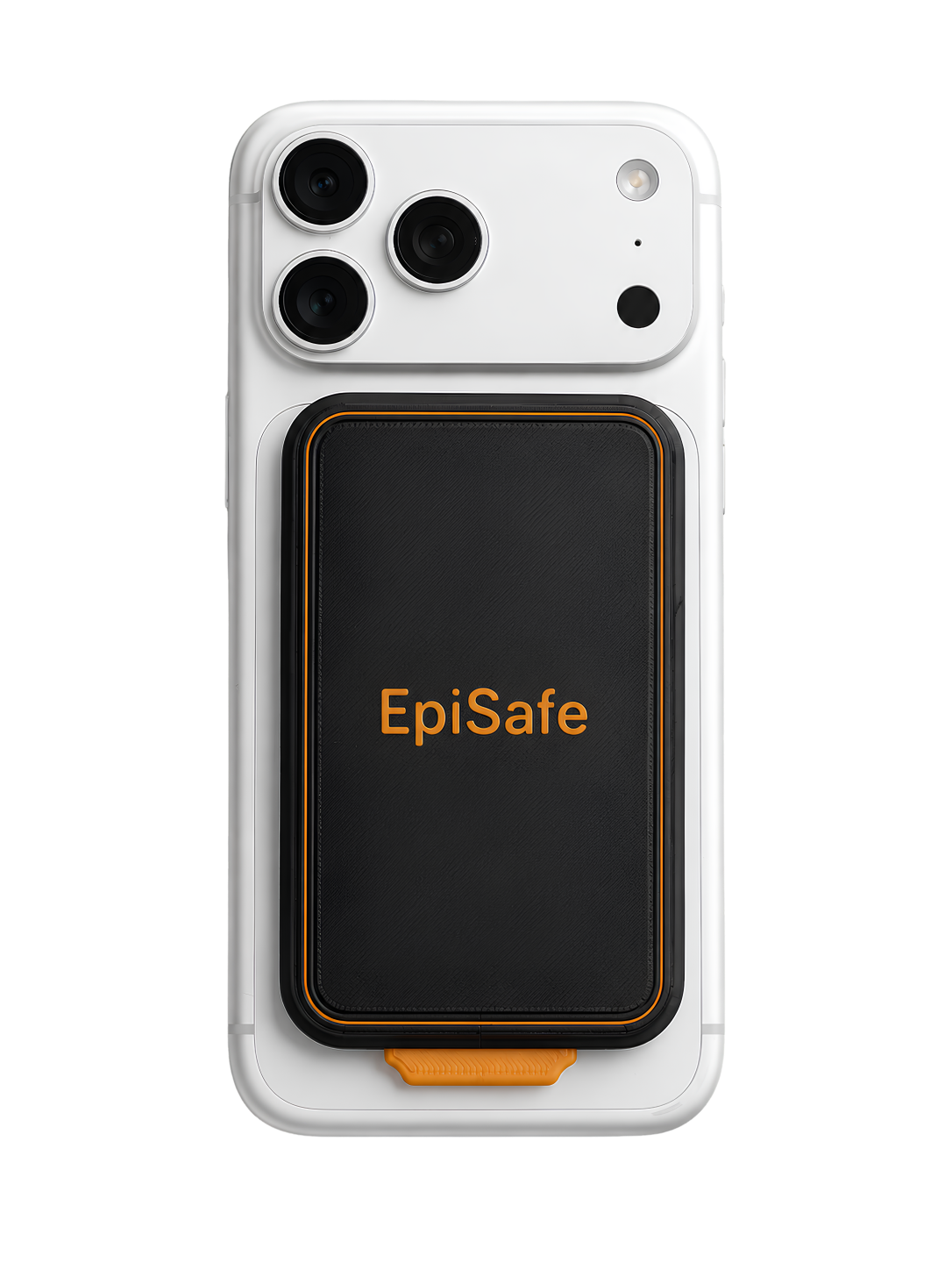
Every part inside was redesigned to fit a phone case: new geometry, simulated fluid dynamics, equivalent intramuscular dose.
11.4 mm thin, MagSafe-compatible. The thing you check 100 times a day now carries the thing that saves your life.
A single orange tab releases the injector. Press against the outer thigh to deliver 0.3 mg of epinephrine, the same therapeutic dose as a standard auto-injector.
A two-step release keeps it locked while it rides in your pocket or bag, so it only fires when you mean it to. And the companion app flags, then locks out, a cartridge the moment it expires.
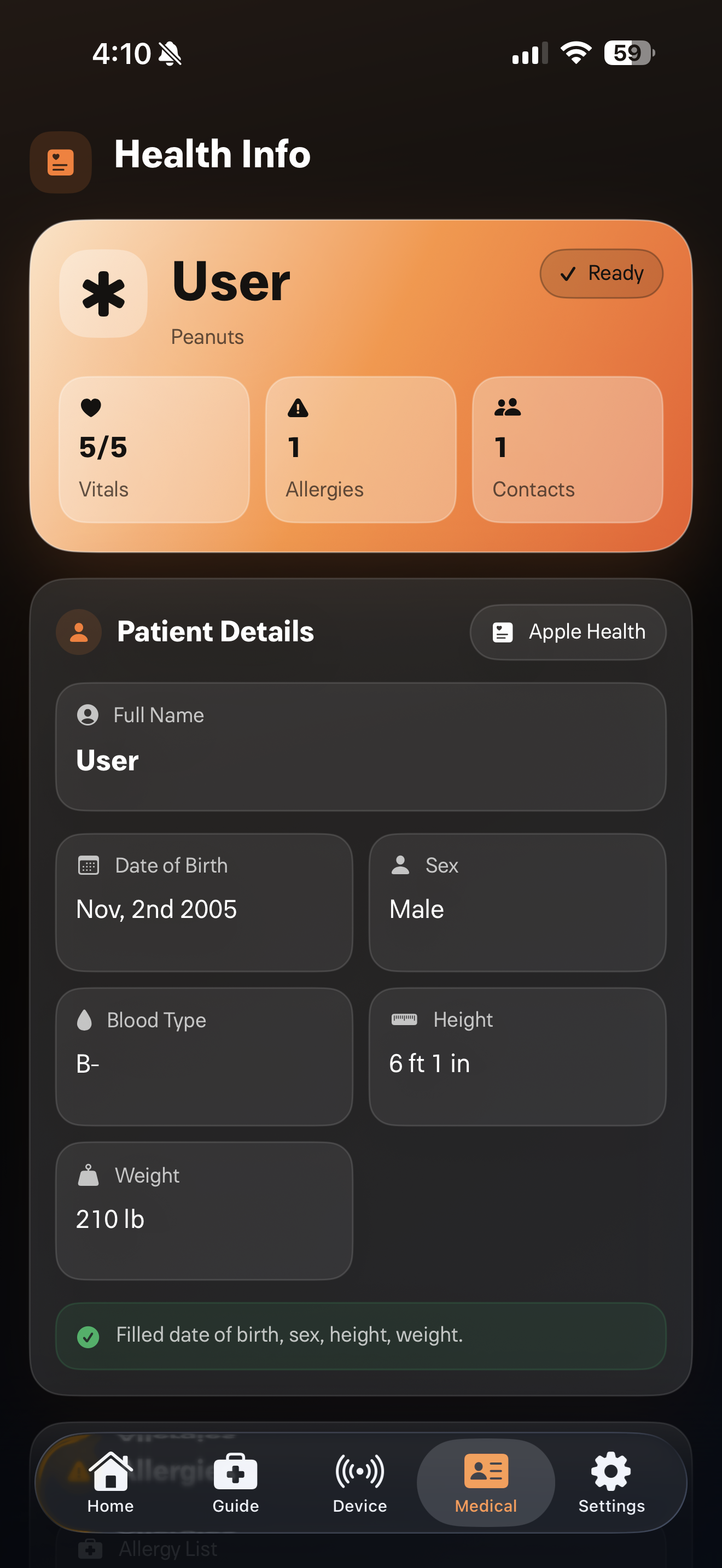
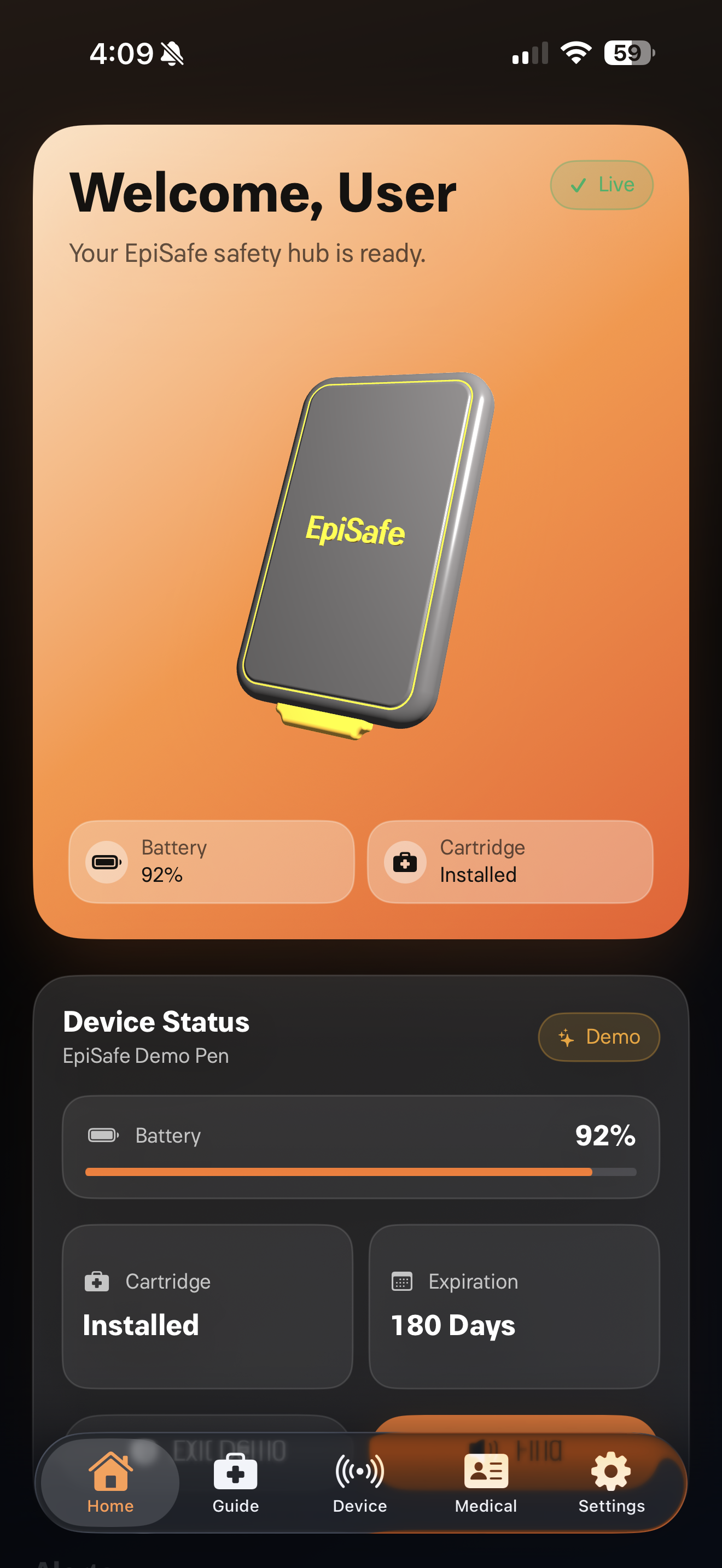
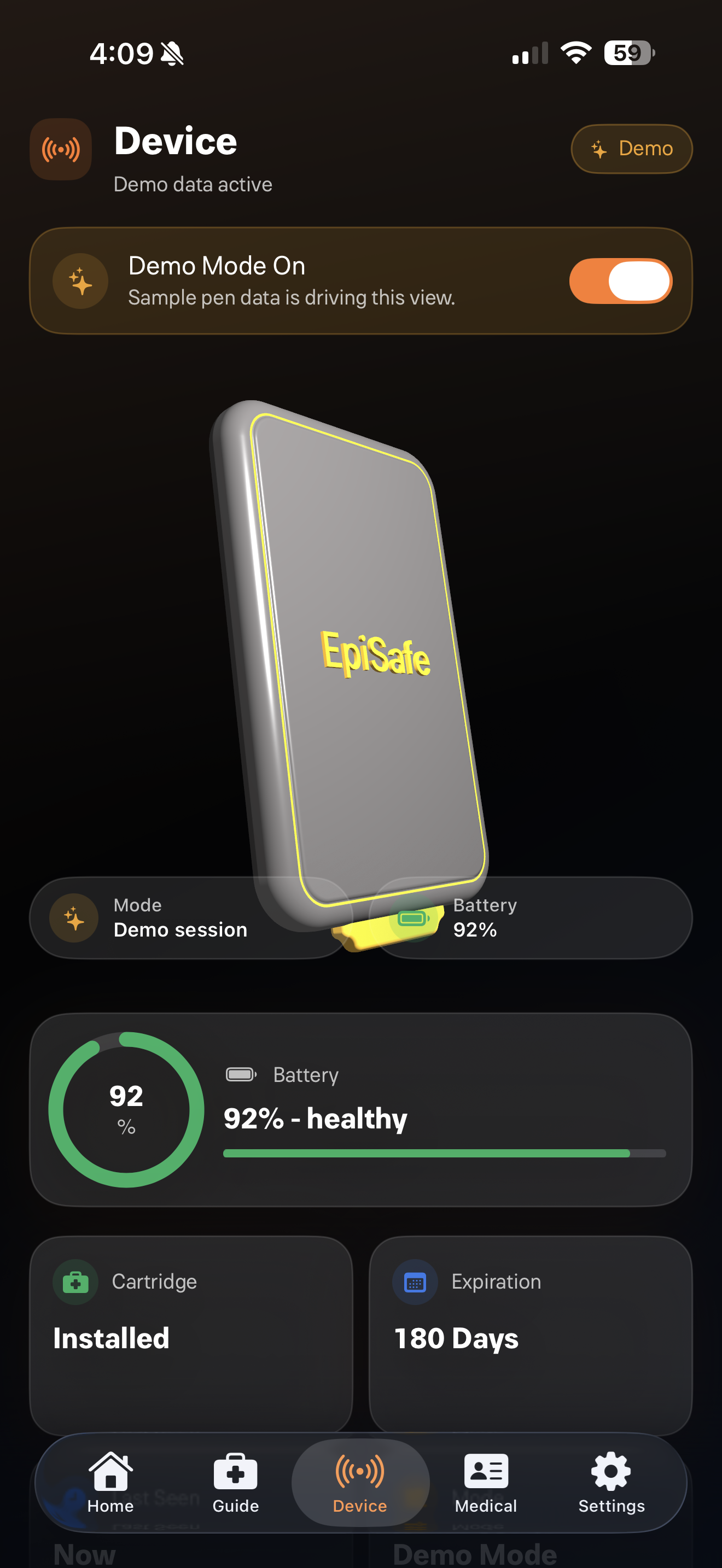
EpiSafe pairs with your phone over Bluetooth LE. See your device status in real time, keep a health profile ready for first responders, and try everything in Demo Mode before your device ships.
The market has been waiting for a new form factor. CAGR ~10% through 2030.
Every patient who carries or should be carrying epinephrine, globally.
33 M Americans live with potentially life-threatening food allergies, our serviceable U.S. market.
The 56% who already forget, the people we're built for.
Twenty-plus discovery interviews with R&D, regulatory, and quality leaders, and their feedback reshaped the product. See what changed →
Individuals from these companies shared their expertise during customer discovery: personal insight, not company endorsements.




Leave your email and we'll tell you the moment EpiSafe is available, plus the occasional build update.
A staged, roughly two-year path to FDA submission, nine months of product development behind us, patent pending, and a team that lives the problem every day.